RSS

Tag Archives: #USConstitution

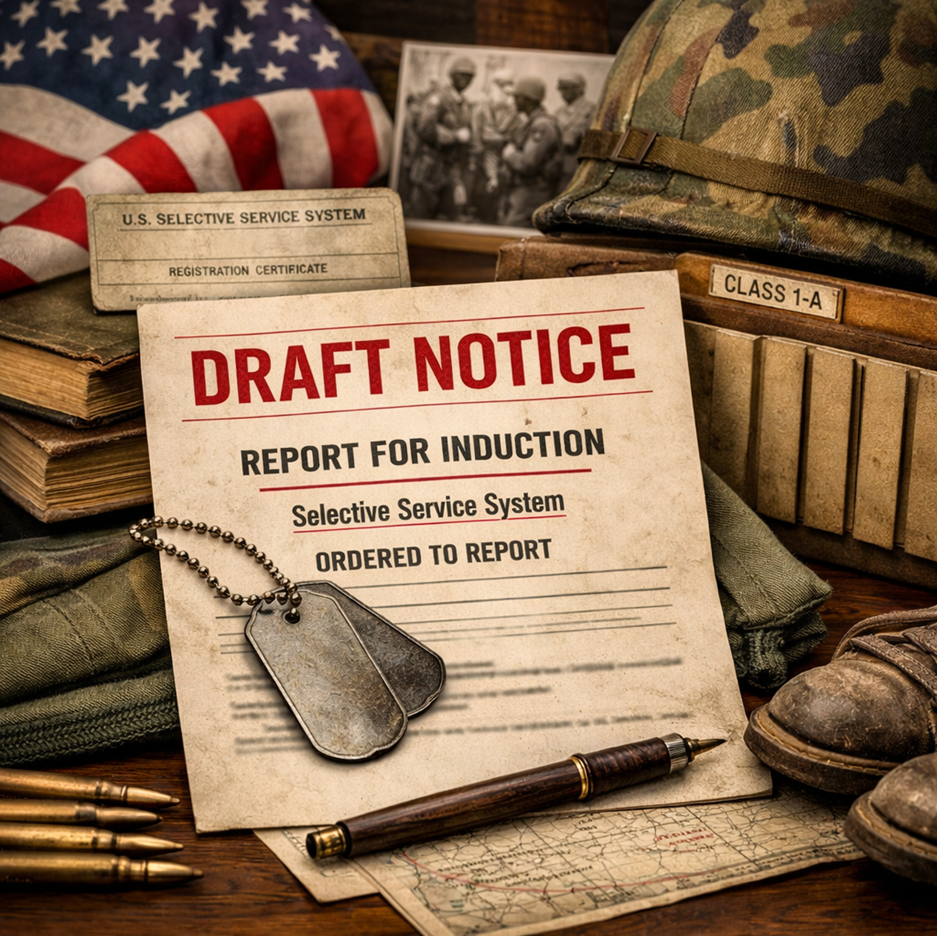
Can a President Bring Back the Draft with an Executive Order?

Image generated by AI using OpenAI’s DALL·E.

Let’s just go ahead and address this one head-on — because it comes up every few years, usually right when the world starts acting a little… spicy.

A student (or sometimes a full-grown adult who should know better) will ask:

“Can the President just bring back the draft with an executive order?”

Short answer?

No. Not even close.

Let’s Walk Through This Like Reasonable People

Now, I say this with all the kindness in the world:

The President is powerful… but he’s not a king.

The Constitution—yes, that document we keep coming back to—very clearly gives certain powers to Congress, not the President. One of those powers is the authority to raise and support armies.

And here’s the important part:

If you’re going to require citizens to put on a uniform and potentially risk their lives, you don’t get to do that with a memo and a signature.

That takes a law.

“But He’s the Commander-in-Chief…”

Correct. Absolutely correct.

The Toddler-in-Chief is, unfortunately, the Commander-in-Chief of the armed forces. That means he can:

  1. Deploy troops
  2. Direct military operations
  3. Activate reserves under existing laws

But here’s the line he cannot cross:

He cannot force civilians into military service without Congress passing a law authorizing it.

No law? No draft. End of story.

History Says the Same Thing

Let’s take a quick trip back in time—because history tends to clear things up when speculation gets a little wild.

During the Vietnam War, the draft was very real. Thousands of young men were called into service.

But—and this is the key point—it didn’t happen because a president woke up one morning and signed an executive order.

It happened because Congress passed laws authorizing it.

Every time the United States has used a draft, it has been through legislation. Not executive whim.

“Wait… Don’t We Still Have a Draft?”

Ah. Good question. This is where things get a little confusing.

We still have the Selective Service System.

That means:

  1. Men ages 18–25 still register
  2. The system is in place

But let me be very clear:

Registration is not the same as being drafted.

Right now, no one is being called up. The system is basically sitting there like a fire alarm—ready if needed, but not actively ringing.

So What Would Actually Have to Happen?

If the United States were to reinstitute the draft today, here’s how it would go:

  1. Congress debates it (and I mean debates it)
  2. Congress passes a law authorizing the draft
  3. The Toddler-in-Chief pulls out his magic Sharpie and signs that law
  4. Then—and only then—the Selective Service System gets to work

Notice something?

The Toddler-in-Chief is part of the process—but not the one who starts it alone.

Why This Is Actually a Good Thing

Now, I’ll put on my “old history teacher who still believes in the system” hat for a second.

This setup is intentional.

If the government is going to require citizens to serve, that decision should:

  1. Be debated publicly
  2. Involve elected representatives
  3. Carry accountability

In other words, it shouldn’t come down to one person having a particularly bold Tuesday.

Final Thought

So, the next time someone says,

“Yeah, the President could just bring back the draft with an executive order…”

You can smile—politely, of course — and say:

“No, that’s not how the Constitution works.”

And then maybe remind them:

We’re still a nation of laws… not executive shortcuts.

 
Leave a comment

Posted by on April 3, 2026 in Uncategorized


Tags: , , , , , , , , , , , , , , , , , , , , , , , , , , , ,

Can the toddler-in-chief put the USPS in charge of mail-in voting?

Every so often, a question comes along that makes me pause, take a sip of Diet Dr. Pepper, and say, “Well… this is why we teach civics.”

Here’s today’s version:

Can the toddler-in-chief, through an executive order, make the Postal Service in charge of sending out and tracking mail-in ballots?

Short answer: No.

Long answer: Also, no — but let’s talk about why, because it actually matters.

First Things First: Who Runs Elections?

Despite what many people assume, the toddler-in-chief does not run elections. Neither does Washington, D.C., as a whole.

Elections in the United States are primarily run by the states. That’s not an accident — that’s straight out of the Constitution. States decide things like:

  1. how ballots are sent out
  2. how they’re collected
  3. how they’re counted

Which means we don’t have one national system — we have fifty slightly different ones, each with its own quirks, deadlines, and occasional ability to confuse everyone involved.

Enter the Mailman (Who Is Also Not in Charge)

Now, let’s talk about the United States Postal Service.

The USPS is very good at what it does:

  1. it delivers letters
  2. it delivers packages
  3. it delivers ballots

What it does not do is run elections.

Think of it this way:

If Domino’s delivers your pizza, that does not make them the head chef. They’re getting the product from Point A to Point B. That’s it.

Same idea here.

What an Executive Order Can—and Cannot—Do

An executive order is a tool the toddler-in-chief uses to direct federal agencies. It’s useful, important, and sometimes misunderstood.

It can:

  1. tell agencies how to prioritize their work
  2. improve systems already in place
  3. nudge the federal machine to run more efficiently

It cannot:

  1. take power away from the states
  2. rewrite election laws
  3. suddenly make a federal agency the boss of something the Constitution gives to someone else

So no, an executive order cannot magically turn the Postal Service into the national manager of mail-in voting. That’s not how any of this works.

“Okay, But What If We Wanted That?”

Now we’re asking a better question.

If the goal were to make USPS fully responsible for sending and tracking mail-in ballots nationwide, you’d need:

  1. Congress to pass a law creating that system
  2. States to cooperate (or challenge it — probably both)
  3. Courts to weigh in, because you can bet someone’s filing a lawsuit before the ink dries

In other words, this would not be a quick fix. This would be a full-scale remodeling of how elections function in the United States.

And if you’ve ever tried to remodel anything — kitchen, bathroom, or federal election system — you know it’s never as simple as it sounds.

Why This Actually Matters

This isn’t just a technicality or a “gotcha” answer.

This is about federalism — that wonderfully inconvenient system where power is divided between national and state governments so that no one gets to run the whole show.

It means:

  1. the President has real power
  2. but not unlimited power
  3. and definitely not “snap your fingers and redesign elections” power

Final Thought

Could the toddler-in-chief influence how ballots are delivered?

Yes.

Could the toddler-in-chief make the Postal Service more efficient in handling election mail?

Also, yes.

Could the toddler-in-chief, with one executive order, take over how elections are run across the country?

Not even close.

And honestly—that’s a feature of the system, not a bug.

If nothing else, let this be a reminder:

Before we assume someone in government can “just do something,” it’s worth asking one very simple question:

“Do they actually have the authority to do that?”

Because more often than not… the answer is no.

 
Leave a comment

Posted by on April 1, 2026 in Uncategorized


Tags: , , , , , , , , , , , , , , , , , , , , , , , , , ,